
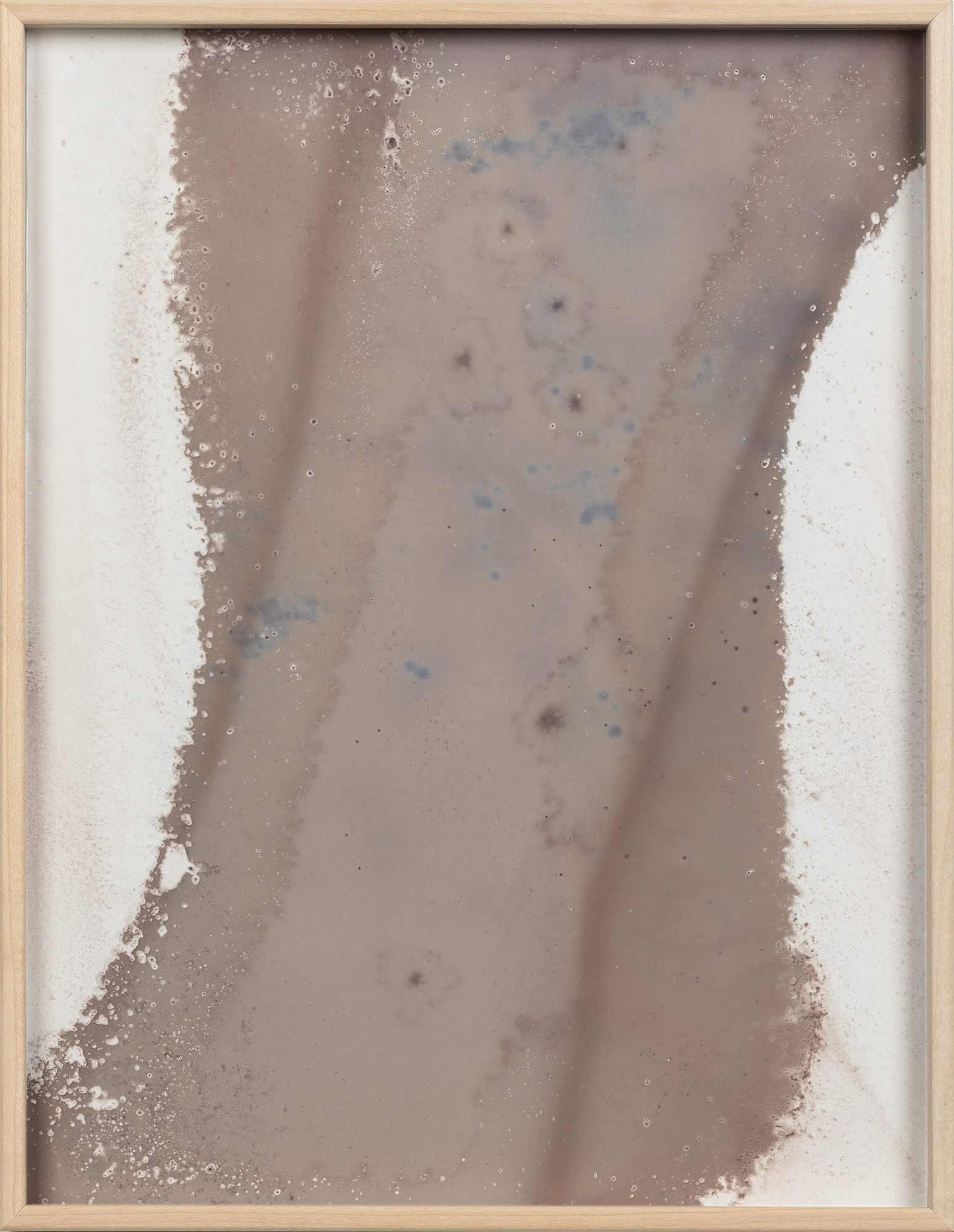


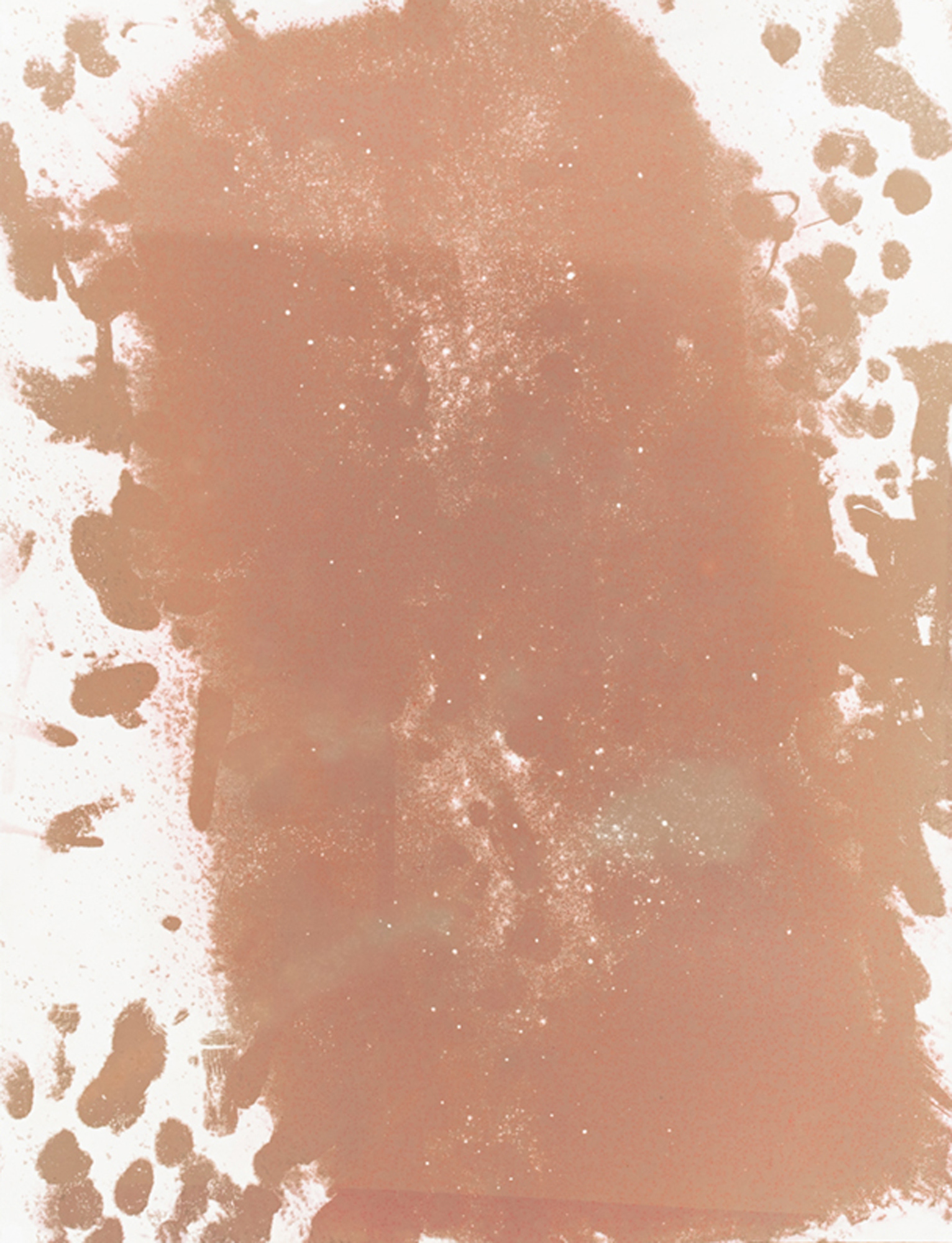
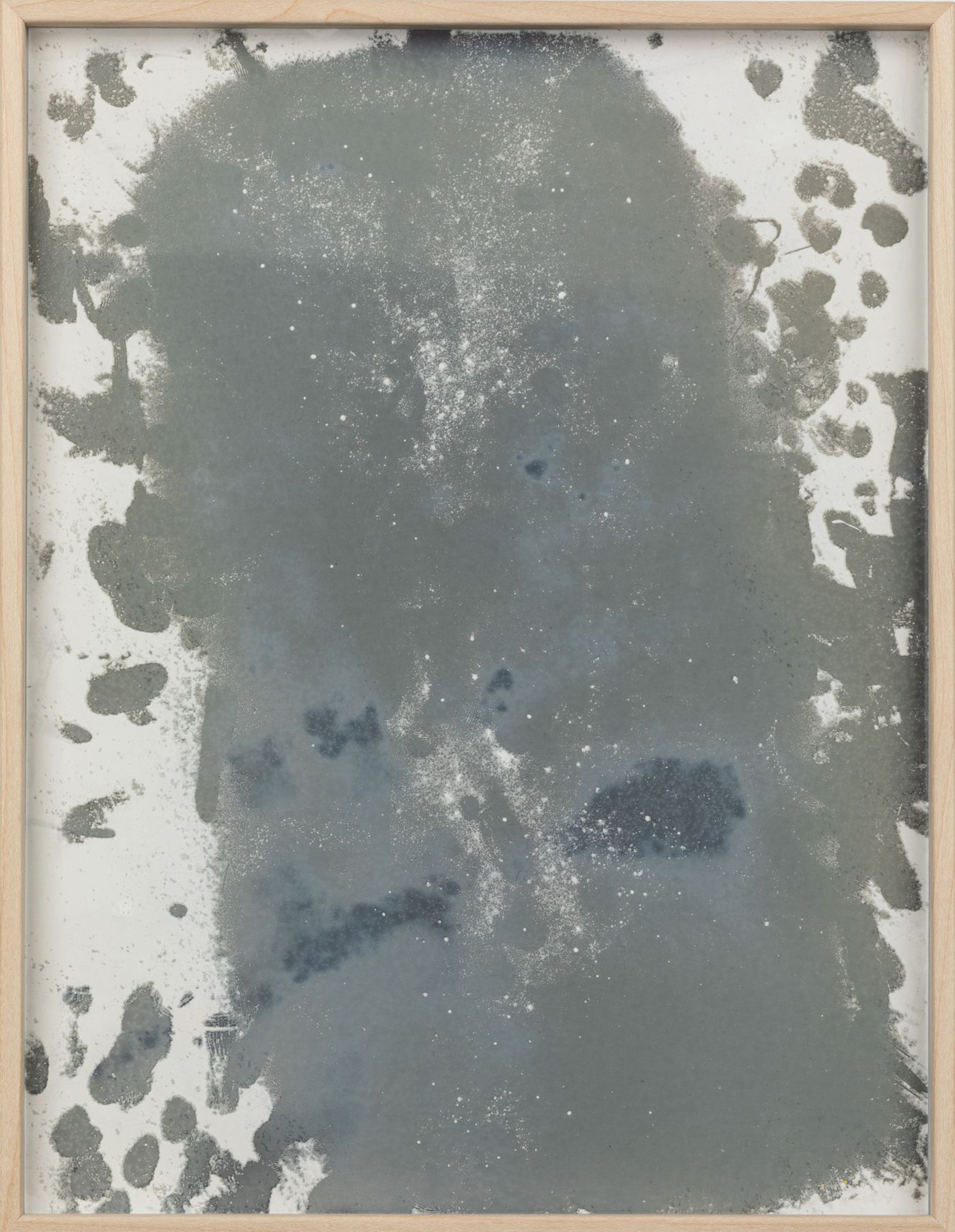
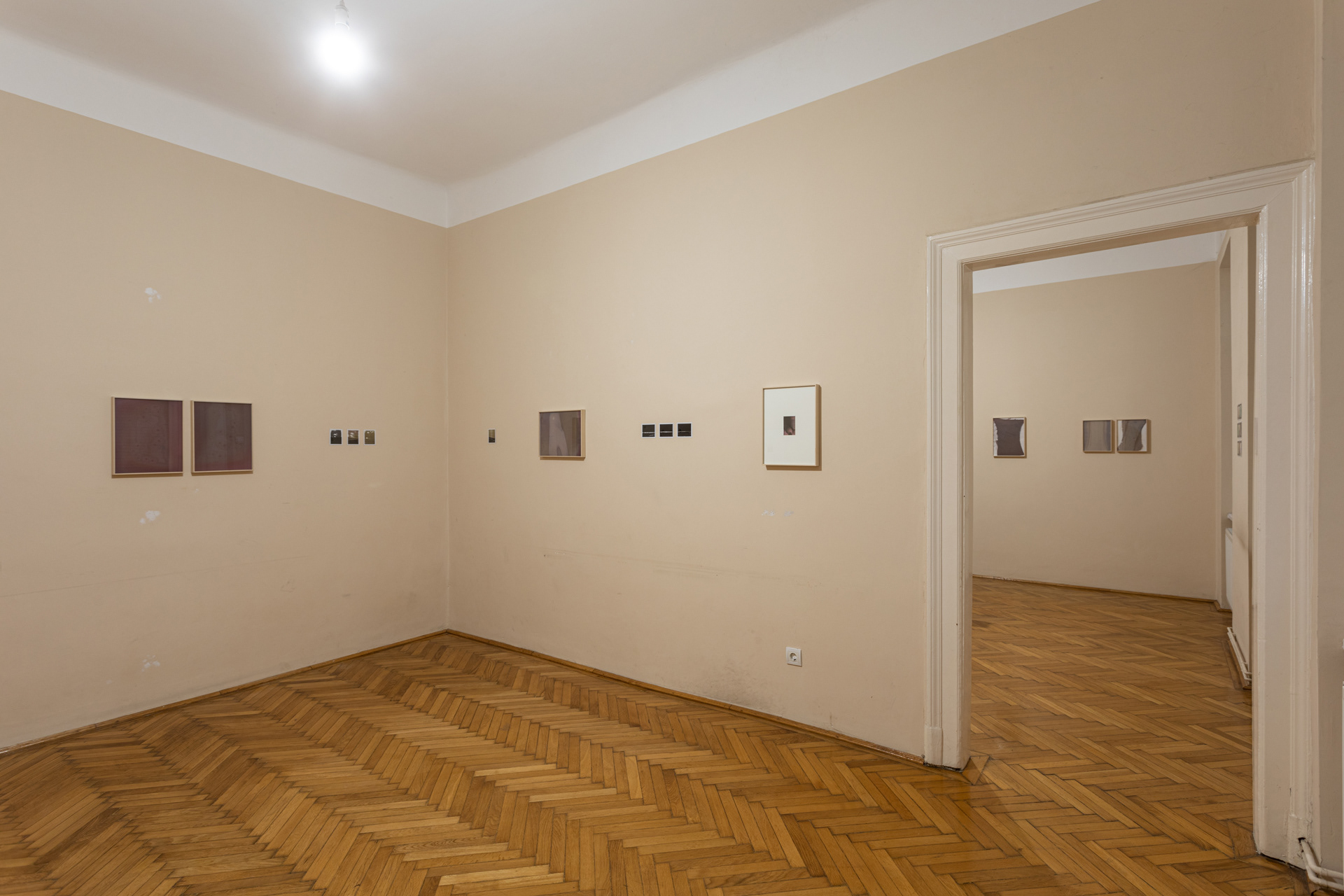
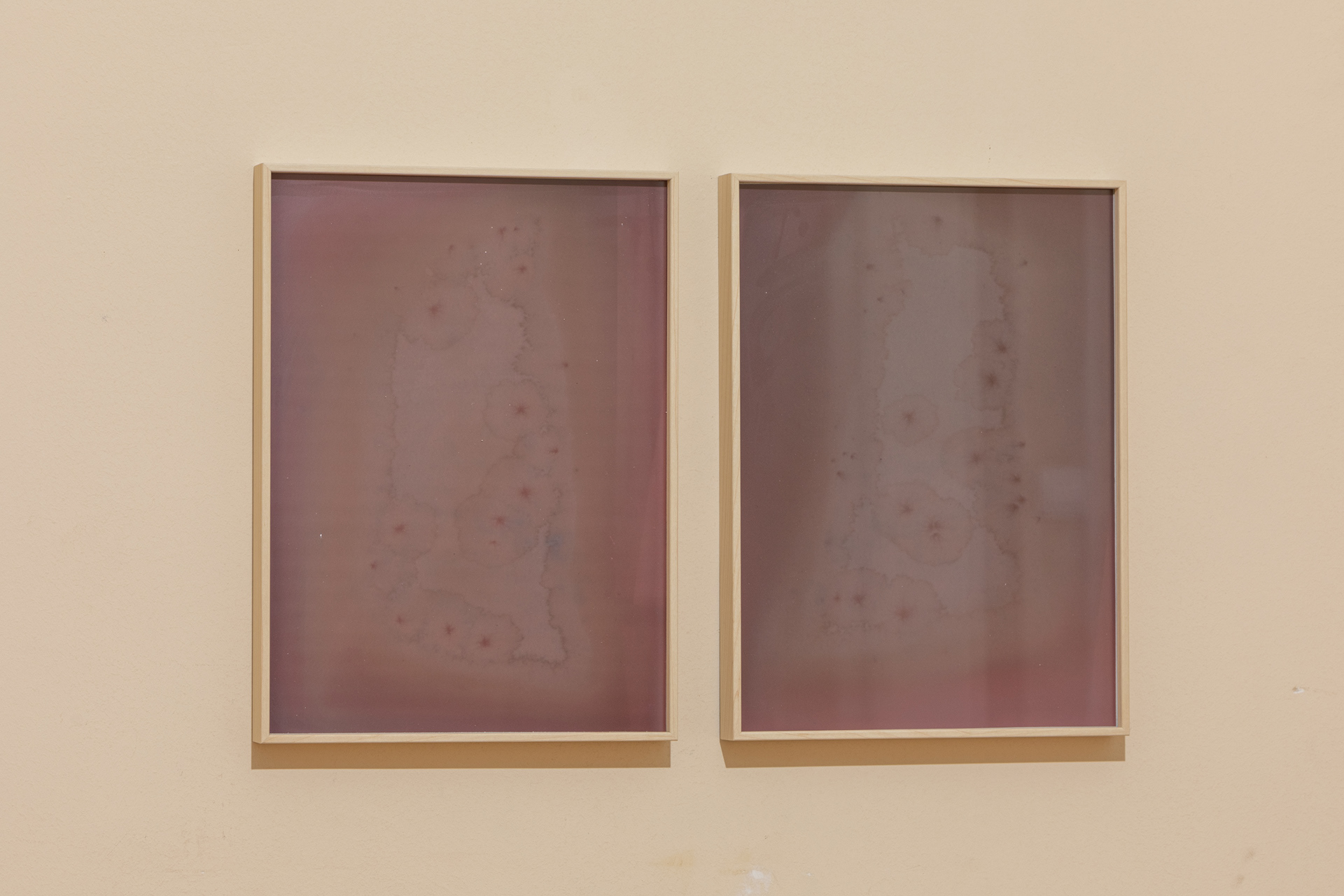
Erosion follows the visual logic of microscopic recordings, tissue samples, and scientific images that reveal the hidden dimensions of life, while also recalling the aesthetics of geological scientific illustrations. Although it adopts the visual language of scientific images designed to carry and transmit information, it does not serve to preserve knowledge related to geology; rather, it conveys data about a newly uncovered dimension of the photo‑emulsion’s behavior. In this case, the procedure is less a direct chemical or intervention‑based operation and more a mechanical one: by literally eroding the material, the artist examines the washing of water, the prolongation of a process otherwise belonging to photographic development, and the loosening of the emulsion on the paper. This method, which allows an even greater role for chance than usual, not only establishes a visual connection between pseudo‑scientific illustrations and the image produced on the paper, but—drawing equally on the specificities of the material and the process—also exceeds a purely metaphorical or conceptual register. These images directly evoke the relationship between water and the primordial history of the Earth, and by revealing the hidden dimensions of landscape formation, they enrich the interplay and tension between micro‑ and macrocosmos that is central to Dobokay’s practice. (BALÁZS-MIKLÓS Kata, art historian)